
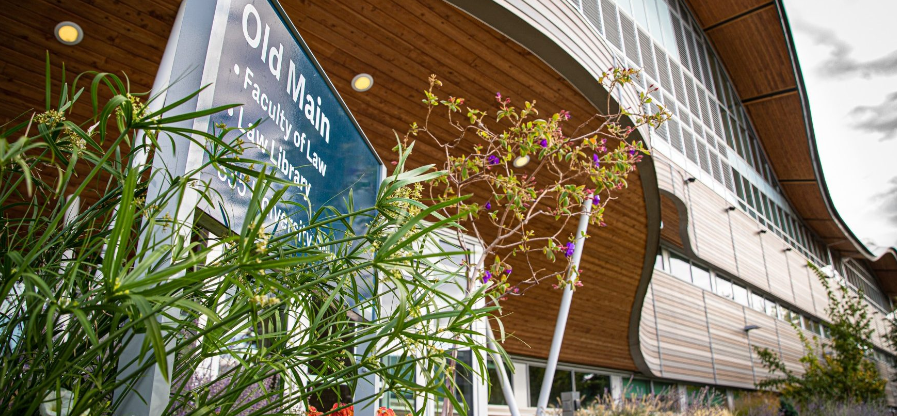
Pushing the boundaries of what’s possible
Meet our innovators
At Thompson Rivers University, we are turning research into real‑world solutions that improve how people learn, work, and live. The Expert Bench showcases these leaders and the breakthrough projects reshaping our communities.
Faculty of Law
Faculty of Nursing
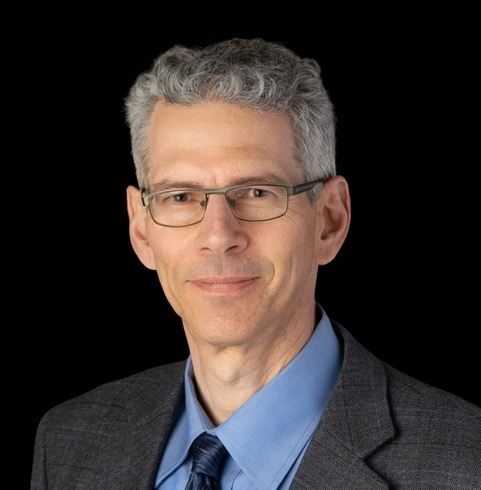
Robert Diab
AI, Law & Policy
Professor Diab writes about law and policy developing in response to AI, and about AI’s impact on society, politics, and education. His writing on AI has appeared in the Tech Policy Press, the Globe and Mail, the Walrus, and Newsweek.
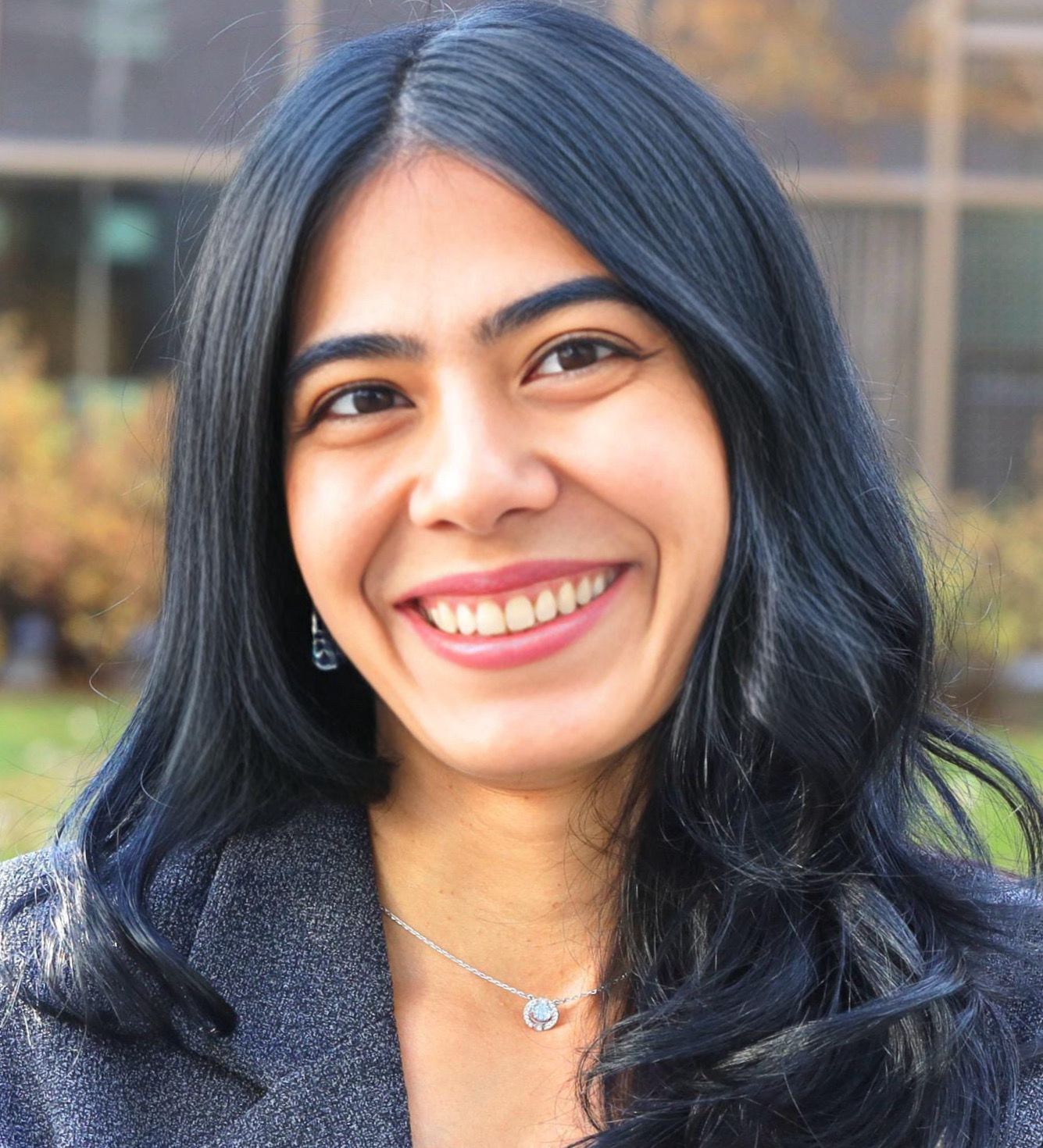
Anila Virani
AI enhanced Healthcare & Education
Dr. Anila Virani researches the ethical, human-centered integration of AI in healthcare and nursing education. She develops AI-enabled learning tools, virtual simulations, and institutional guidelines to enhance clinical decision-making and student engagement. Serving on the CASN AI Task Force, her work explores student AI practices, public discourse, and policy to ensure safe, effective adoption.
Faculty of Science

Anthony Aighobahi
AI-Enhanced Learning & Healthcare Ethics
Dr. Aighobahi develops simulation-based learning tools, including an AI-Powered Patient Persona Simulation that allows healthcare students to practise communication, empathy, and clinical reasoning with realistic patient characters. His work also explores fairness and ethics in AI applications for healthcare.
Anusha Venkataraman
Nanotechnology, Microelectronics & Physics
Dr. Venkataraman develops multi-agent LLM pipelines and interactive simulations for physics education. Her AI research also extends to building advanced models for microplastics detection and analysis.
Ajay Dhruv
Agentic AI, Machine Learning & Education
Dr. Dhruv integrates advanced AI systems—including agentic AI and generative models—into teaching, learning, and applied research. His work focuses on leveraging emerging AI capabilities to enhance educational outcomes and support innovative pedagogy.
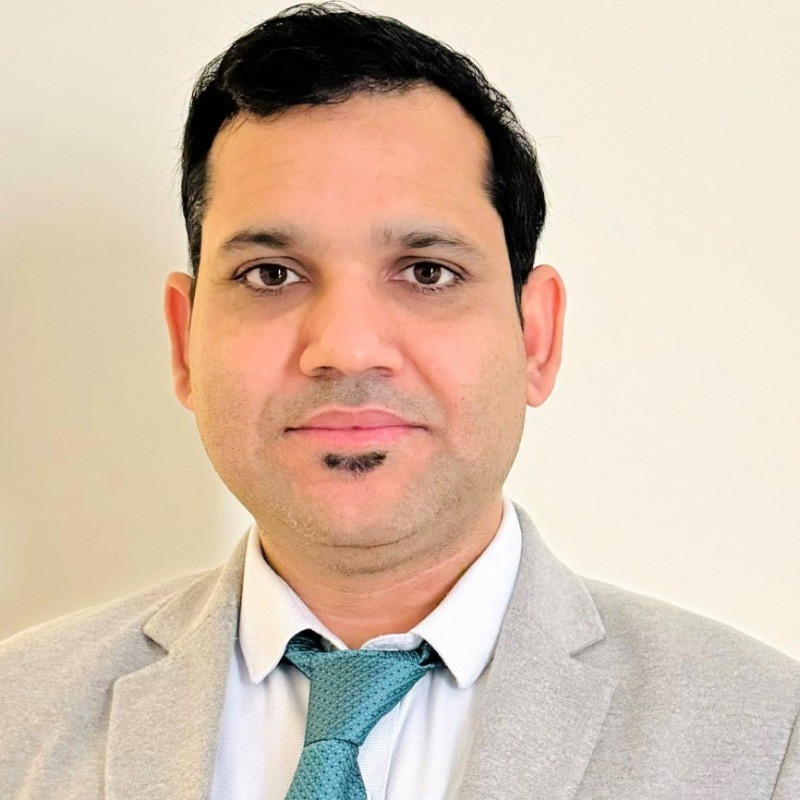
Ghazanfar Latif
AI, Assistive Technologies, Medical Imaging & Robotics
Dr. Latif works across artificial intelligence, assistive technologies, generative AI, medical imaging, computer vision, large language models, IoT, robotics, and deep learning. He holds a Best PhD Gold Medal and has been recognized among the World’s Top 2% of Scientists by Stanford University researchers in both 2024 and 2025.
Md Moniruzzaman
AI, Quantum Intelligence & Blockchain Security
Dr. Moniruzzaman applies AI and quantum intelligence to solve complex problems in next-generation cyber-physical systems. His work spans trading networks, intelligent transportation systems, and precision agriculture, with a focus on blockchain-based security.
Munima Jahan
Artificial Intelligence in Education
Dr Jahan’s research focuses on the intersection of software engineering, artificial intelligence, and machine learning. Her work aims to improve the reliability and quality of complex software systems by applying machine learning techniques to software engineering challenges such as requirement analysis, defect detection, and development process optimization. She also studies ethical AI, including bias in large language models and the use of AI to enhance teaching effectiveness, personalize learning, and strengthen research capacity in education.
Quan Nguyen
AI, Data Science & Higher Education
Dr. Nguyen builds pedagogy-driven AI systems that enhance learning and metacognition, as well as large-scale predictive models of student retention and academic success. A centrepiece of his research is TRU-Think, an AI assistant that uses Socratic questioning, metacognitive prompts, and real-time code analysis to cultivate deeper student understanding.
Sean Hellingman
Computer Vision & Applied Sports Analytics
Dr. Hellingman leads the salmon monitoring project, a collaboration with Skeetchestn Indian Band and Secwépemc Fisheries Commission that uses AI-powered video analysis to classify fish movements and generate real-time salmon counts in the Deadman Watershed. He is also developing computer vision tools for TRU Athletics, providing near real-time performance insights for the Women’s Volleyball and Soccer programs.
Shaista Jabeen
AI in Student Learning & Academic Integrity
Dr. Jabeen explores how AI can support students in ideation, outlining, conceptual guidance, and initial research while encouraging independent critical thinking. Her work also establishes clear boundaries between responsible AI use, plagiarism, and academic misconduct.
Sukhchandan Randhawa
Data Analytics, Machine Learning & IoT
Dr. Sukhchandan’s work emphasizes bridging the gap between theoretical knowledge and real-world implementation through applied research and experiential learning. Her focus is on integrating intelligent technologies into practical solutions for data-driven decision-making and smart environments.
Vijal Jain
AI & Signal Processing for Earth Observation
Dr. Jain’s research explores the intersection of Earth observation and AI-driven analytics, applying advanced signal-processing techniques to remote sensing challenges. Her work advances how we monitor and understand environmental systems using intelligent data analysis.
Yang Song
Video Analytics & Temporal Action Detection
Dr. Song’s research goes beyond traditional video classification to pinpoint exactly when actions start and end within longer, unedited video. This technology has applications in healthcare—supporting training, rehabilitation, and elderly care—and in education, where it can analyse classroom activities and lab performance to provide insights into engagement and skill development.
Yasin Mamatjan
Multimodal Machine Learning & Wearable Health Monitoring
Dr. Mamatjan’s research bridges clinical analytics, physiological modelling, cancer genomics, and agent-based AI to drive breakthroughs in cancer diagnostics, stroke detection, and critical care monitoring. He also co-develops a decision support system with a smart chatbot for enhanced glioma diagnosis, in collaboration with Toronto General Hospital and Gnowit Inc.

Zeinab Teimoori
AI, Machine Learning & Generative AI
Dr. Teimoori advances intelligent systems and data-driven decision-making in sustainability. Her ongoing research explores the intersection of AI and intelligent transportation systems, including quantum learning for optimizing electric transportation systems and energy-efficient smart cities, and developing AI-driven models for predictive analysis in environmental monitoring and transportation planning.
Faculty of Arts
Peter Zakrzewski
XR, Human+AI Co-Presence & Socio-Technical System
Dr. Zakrzewski advances humane-centered design for socio-technical systems, researching Human+AI co-presence and the structural conditions for trustworthy collaboration between people and intelligent systems. His XRX design research explores how extended reality (XR) can ground AI’s symbolic reasoning in embodied, spatial experience, work detailed in his books Designing XR and Mediating Presence.